Skip to content

Choosing residential flooring room by room is not indecision, it is how you avoid paying twice. Each room applies a different kind of stress: standing water in a bathroom, point loads and grit in an entry, thermal swing in a garage, humidity cycling in a basement. A single material that handles all of it well does not exist, and the rooms where people compromise are the rooms that get replaced first.
Buffalo adds two conditions that change the math. The first is road salt, which comes in on boots from November through April and is both abrasive and hygroscopic, so it grinds finishes and holds moisture against them. The second is the humidity swing between a damp lake effect summer and a heated, very dry interior in January. Wood expands and contracts across that range, which is why solid hardwood behaves differently here than it does in a stable climate.
What follows is a decision framework by room rather than a ranking of products. Sergiy P. Lupekha is involved in every project we take on, and these are the same trade offs we walk through in person.
Kitchen: Spills, Grit and Standing Time
Kitchen floors fail at the seams and at the dishwasher. Water does not destroy a kitchen floor in one event; it works in slowly at a joint over months. Porcelain tile is the most tolerant option because the tile itself is unaffected and only the grout needs maintenance. Luxury vinyl plank and LVT come next, and the deciding detail is the locking system and whether the edges are sealed, not the picture printed on the surface.
Solid hardwood in a kitchen is workable but it asks for vigilance, since a slow supply line leak under a cabinet can cup a floor before anyone notices. Carpet does not belong here at all. If comfort underfoot is the concern, the answer is a mat at the sink, not a softer floor.
Bathroom: Waterproof Is the Only Requirement That Matters
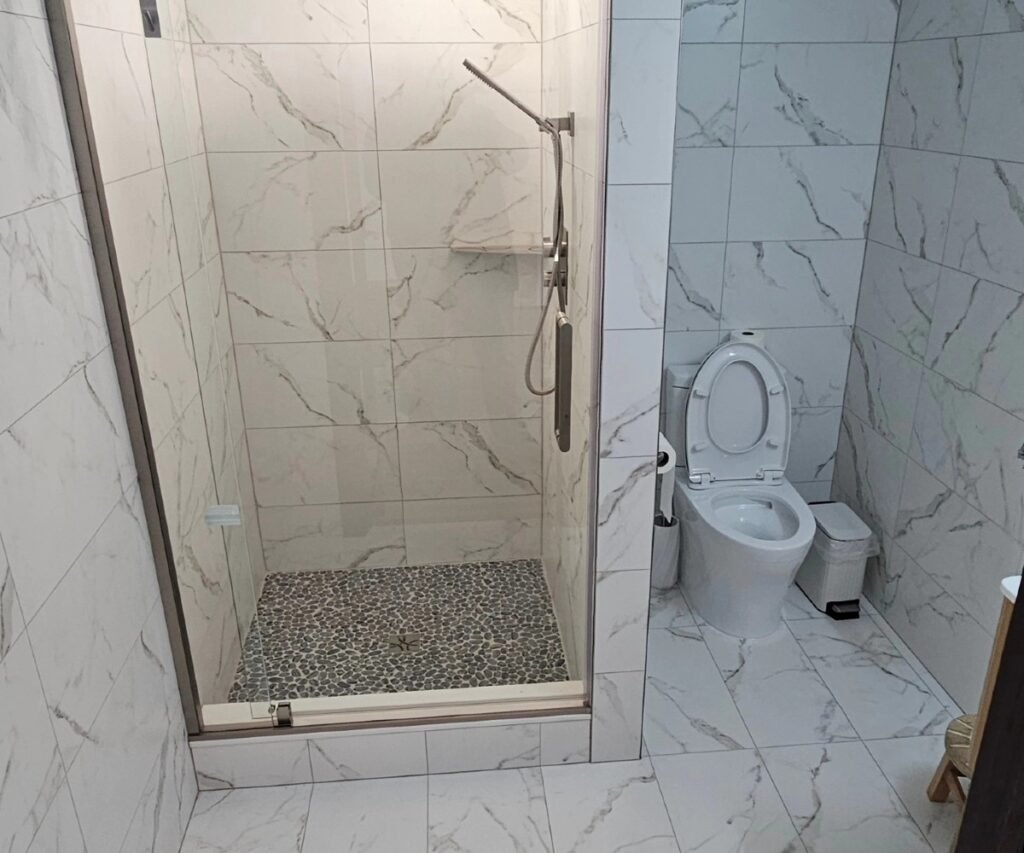
Bathrooms are the one room where water resistance and waterproofing are genuinely different specifications. Water resistant means a spill can be wiped up. Waterproof means the assembly survives standing water and steam without the substrate absorbing it. In a full bathroom you want the second one.
Porcelain and ceramic tile with a properly sealed grout line remains the default, and LVT is the strong alternative where a warmer surface or a lower budget for subfloor prep matters. Laminate and engineered wood are the common regret, because the core swells once moisture reaches it and swelling is not reversible. We cover the full comparison in our guide to choosing the best bathroom flooring for your needs, which goes deeper than this section can.
Living and Family Rooms: Appearance With a Realistic Wear Budget
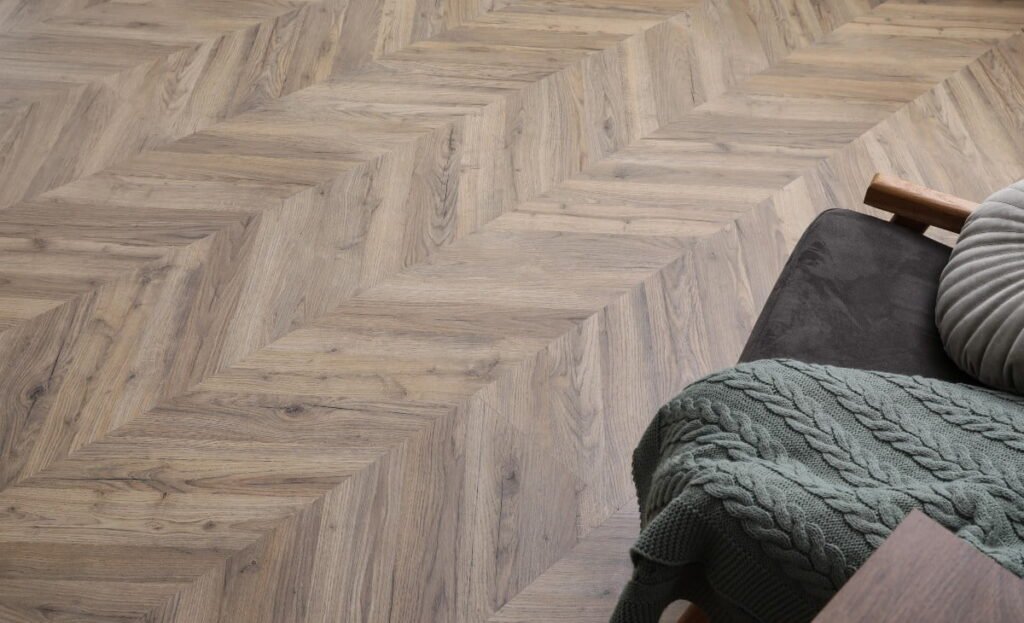
These rooms see steady foot traffic and very little water, which is why they are the place hardwood earns its reputation. Solid hardwood can be sanded and refinished several times across its life, so a scratched floor is a maintenance item rather than a replacement. Engineered hardwood gives you real wood over a dimensionally stable core, which handles the Buffalo humidity swing better and can usually be refinished at least once, depending on wear layer thickness.
LVP and laminate make sense where pets, kids or a rental situation mean the floor takes abuse that does not justify refinishing. The honest trade is that neither can be repaired in place; damage means replacing planks.
Bedrooms: Comfort First, Because Wear Is Low
Bedrooms have the lightest duty cycle in the house, which widens the options rather than narrowing them. Carpet is a defensible choice here even if it is a poor one elsewhere, and it does real work on sound transmission between floors and on how a room feels in a Western New York January.
Hardwood with area rugs is the alternative that keeps resale flexibility. The one option to think twice about is tile over an unheated bedroom floor, which is genuinely unpleasant in a heating season that runs from October into April unless radiant heat is going in underneath it.
Basement: Moisture Management Decides Everything
A basement floor is a vapor problem before it is a flooring problem. Concrete slabs in this region sit against soil that holds water, and moisture moves up through the slab as vapor even when the floor is visibly dry. Install a material that traps that vapor without addressing it and the failure shows up underneath, as adhesive release, cupping or mold, long before anything is visible on top.
That is why epoxy, LVP and LVT dominate down here and why solid wood and standard carpet do not. Because the moisture question has to be answered before the material question, we treat it separately in our complete basement flooring guide for Buffalo homeowners rather than compressing it into a paragraph.
Entryway and Mudroom: The Hardest Working Floor in a Buffalo Home
This is the room the local climate actually decides. Everything that comes off a boot lands here: snowmelt, sand, and salt that is both abrasive and chemically aggressive to finishes. An entry floor sees more destructive input in four months than most rooms see in four years.
Tile, LVT and epoxy all hold up. What matters as much as the material is the detail work: a sealed transition at the door, a slight slope or a drain where one is practical, and a proper walk off mat long enough that three full steps land on it before anyone reaches the finished floor. That last item removes more grit than any product choice will.
Garage: Thermal Swing and Chemistry
A garage slab goes from below freezing to warm and wet every time a car pulls in during a snow event, and it takes road salt, brake dust, oil and solvents along the way. A layered epoxy system bonds to the prepared slab and gives a surface that resists all of that while sealing the concrete against the freeze and thaw cycling that causes spalling. Surface preparation is the whole game; epoxy applied over a slab that was not ground and profiled properly will lift in sheets.
Quick Reference: Best Flooring by Room
Here is the full comparison in one view:
| Room | Best choice | Strong alternative | What decides it |
|---|---|---|---|
| Kitchen | Porcelain tile | Luxury vinyl plank or LVT | Water works in slowly at seams and at the dishwasher |
| Bathroom | Porcelain or ceramic tile with sealed grout | Sheet vinyl | Needs true waterproof, not water resistant |
| Living and family rooms | Solid or engineered hardwood | Luxury vinyl plank | Steady traffic, very little water |
| Bedrooms | Carpet | Hardwood with area rugs | Lightest duty cycle in the house |
| Basement | Luxury vinyl plank | Sealed concrete or epoxy | Vapor moves up through the slab even when it looks dry |
| Entryway and mudroom | Porcelain tile | LVT or epoxy | Snowmelt, sand and salt, abrasive and chemically aggressive |
| Garage | Layered epoxy system | Sealed concrete | Thermal swing, road salt, oil and solvents |
The pattern is clear. Rooms with water exposure need waterproof materials. Rooms with heavy traffic need scratch and abrasion resistance. Rooms where you want comfort and warmth have the most flexibility. And in every case, Buffalo’s climate pushes the decision toward materials that handle moisture, humidity swings, and temperature changes without failing early.
Frequently Asked Questions
Can I use the same flooring throughout my entire home?
You can, and LVP is the usual choice when people do, because it tolerates most conditions reasonably well. The trade is that it is not the best answer in any single room. A common middle path is one material across the main living areas for visual continuity, with tile or epoxy in the bathrooms, mudroom and basement where the demands are genuinely different.
Is carpet a bad choice in Buffalo?
Not at all, it is just room specific. Carpet does well in bedrooms and upper level hallways, where wear is light and warmth and sound control are worth something. It does poorly anywhere salt and snowmelt arrive, because both the grit and the moisture stay in the fibers.
What is the best flooring for a home with large dogs?
Look at hardness and at how scratches read rather than at a durability claim. Tile and epoxy are effectively immune to claws. LVP with a thick wear layer and a textured surface hides marks well. Softer woods such as pine show every nail, while harder species and wire brushed finishes hide wear far better.
Does Buffalo humidity really affect flooring that much?
Yes, and the mechanism is the swing rather than the level. Summer interiors here can run humid while a heated house in January can drop very dry, and solid wood moves across that range. That is why acclimating material before installation and leaving proper expansion gaps at the perimeter matter more here than in a stable climate.
What flooring adds the most resale value to a Buffalo home?
Hardwood or engineered hardwood in the main living areas is still what buyers respond to most strongly. Beyond that, the bigger factor is consistency. A home with sensible, matched flooring throughout shows far better than one with four materials meeting at four different transitions.
Should I worry about radiant heat compatibility?
Only if radiant heat is in the plan, and then it is the first question, not the last. Tile and stone are ideal because they conduct well. Many LVP and engineered products are rated for radiant use but carry a maximum surface temperature. Solid hardwood is the difficult one, and thick or dense solid planks are often better avoided over radiant systems.
Modern Flooring and Renovations installs residential flooring throughout Buffalo and Western New York, including Amherst, Williamsville, Clarence Center, East Amherst, Getzville, Cheektowaga, North Tonawanda, Wheatfield, Newfane and Lockport. If you are working through more than one room, it is worth planning the sequence and the transitions together rather than deciding room by room as you go.
Request a free quote and we will walk the rooms with you.